Which Blended Family Sitcoms Are Worth Watching?
Discover why each blended family sitcom offers a different viewing experience, from classic comfort to modern humor.
If you want a blended family sitcom to start with, choose by tone first: The Brady Bunch is the gentle classic, Step by Step gives you louder 1990s stepsibling conflict, and Modern Family feels quicker and more contemporary. The best pick depends less on which show is "most famous" and more on whether you want comfort viewing, family-night simplicity, or sharper adult comedy.

What Is a Blended Family Sitcom?
A blended family sitcom is a comedy built around people forming one household after separate family lives. That usually means remarriage, stepparents, stepsiblings, or children adjusting to a new parent figure. The comedy comes from the adjustment: different rules, different loyalties, and different expectations suddenly have to fit under the same roof.
The key difference from a standard family sitcom is that the family is still becoming a family. The audience is not just watching parents and children deal with ordinary problems; it is watching trust develop after change. A new stepparent may not know when to discipline, a child may resist sharing space, and siblings may compare "my family" with "your family" before they start acting like one group.
That is why the genre can be funny without feeling random. Chores, bedrooms, holidays, school events, and dinner-table rules all carry extra meaning when everyone is still working out where they belong. Older shows often make the process neat and reassuring, while newer sitcoms tend to leave more room for awkwardness, divorce, co-parenting, age gaps, and cultural differences.
Blended Family Sitcoms to Start With
For a first watch, it helps to begin with shows that represent different versions of the same idea. These three are useful because they do not all solve blended-family tension in the same way.
| Show | Best if you want | What to expect |
|---|---|---|
| The Brady Bunch | A clear, gentle starting point | Classic lessons, mild conflict, easy family-night viewing |
| Step by Step | More stepsibling friction | Broader jokes, louder arguments, 1990s sitcom energy |
| Modern Family | A faster modern style | Mockumentary humor, adult-leaning jokes, more varied family dynamics |
How Blended Family Sitcoms Find the Humor
The humor usually starts with ordinary family problems that become harder because the household is new. A bedtime rule is not just a bedtime rule when one child had stricter parents and another had more freedom. A bedroom argument is not just about space when someone feels pushed out of the home they already knew.
The best shows keep that balance in mind. They make the conflict funny, but they do not forget that the joke often sits on top of insecurity, loyalty, and the fear of being replaced.
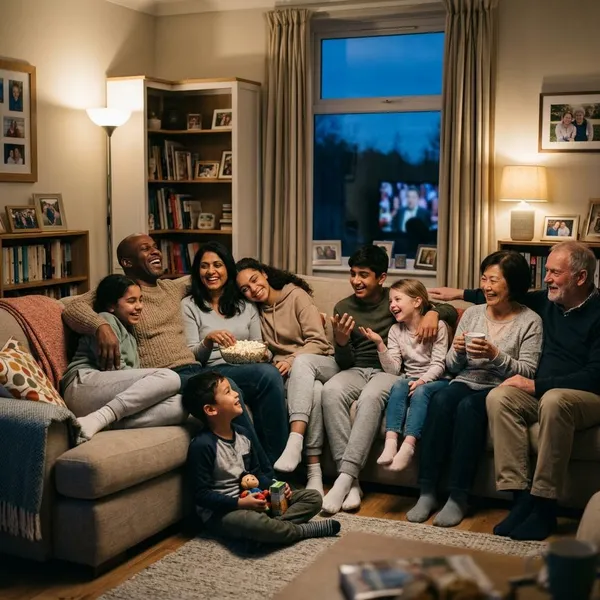
Different house rules collide
House rules are an easy source of comedy because they reveal how differently two families lived before they merged. One parent may expect chores before television, while the other has always handled evenings more casually. Children notice the inconsistency immediately, and sitcoms turn that into bargaining, rule-shopping, and exaggerated outrage.
Stepsiblings compete for space and attention
Stepsibling rivalry works because the new siblings do not start with shared memories. They may be sharing a bathroom, a parent's attention, or a bedroom before they have built any loyalty to each other.
- Space: who gets the bigger room, the quiet corner, or the bathroom first.
- Status: who feels like the "real" child in the home.
- Attention: who thinks the new parent is favoring the other side.
A good sitcom lets the rivalry soften over time. The funniest version is not constant cruelty; it is the slow move from competition to reluctant teamwork.
Stepparents build trust through everyday mishaps
Stepparent humor often comes from trying too hard. A new stepdad may force a bonding trip that nobody wants, or a stepmom may give advice before a child is ready to hear it. The awkwardness is funny because the intention is usually good, even when the execution is terrible.
This is also where the emotional payoff tends to land. Trust rarely appears after one perfect speech. It builds when the adult keeps showing up after the failed dinner, the bad gift, the embarrassing school moment, or the discipline mistake.
How to Choose a Blended Family Sitcom
Start with who is watching and what kind of mood you want. A relaxed Sunday family watch needs a different choice than an adult rewatch or a quick modern comedy after work. Fame helps less than fit.
If you are watching with kids, check tone and age suitability before assuming every family sitcom is child-friendly. If you are watching alone for nostalgia, pacing may matter more than realism. If you want something that feels closer to current family life, a newer show will usually be easier to settle into.
Match the family setup to your interests
Pick The Brady Bunch or Step by Step if you specifically want two sets of children learning to live as one household. Pick Modern Family if you want blended-family material as part of a wider family network rather than the only focus.
Choose nostalgic humor or a modern style
Nostalgic sitcoms are usually better when you want predictable comfort: clear conflicts, obvious punchlines, and a reassuring ending. That can be exactly right for a low-effort watch or for someone who enjoys older TV rhythms.
Modern sitcoms move faster and often rely on irony, awkward pauses, and characters commenting on their own behavior. If you get impatient with slower pacing, start with Modern Family rather than forcing yourself through a classic just because it is historically important.
Check age ratings before watching with kids
A family-centered show is not automatically right for every child. Older sitcoms may be milder but slower; newer sitcoms may be funnier for adults while including dating jokes, sarcasm, or relationship humor that younger viewers may not follow.
- For younger kids: preview an episode and look for pacing as well as content.
- For teens: a sharper modern show may hold attention better.
- For mixed-age family night: choose the gentler option unless everyone is comfortable with adult-leaning jokes.
Conclusion
The easiest way to choose is to match the show to the viewing situation: The Brady Bunch for gentle classic comfort, Step by Step for louder stepsibling tension, and Modern Family for a faster, more current take on changing family roles. A blended family sitcom works best when the jokes make the new household feel specific, not when the family setup is just a gimmick.
FAQS
Does Full House count as a blended family sitcom?
Not usually. Full House is a nontraditional family sitcom about relatives and a friend helping raise children, not a sitcom about remarriage or two separate family units merging.
Are adoptive families always blended families?
No. Adoption can be part of a blended family story, but an adoptive family is not automatically blended unless separate family units or new parental relationships are being joined into one household.
Is The Blended Bunch a sitcom or a reality show?
The Blended Bunch is a reality show. It follows a real family in an unscripted format, while a sitcom uses fictional characters, scripted scenes, and planned comedy.