Which Police Comedy Sitcom Should You Start With?
Learn how each police comedy sitcom style works, from teamwork and deadpan parody to improvised chaos and quick episodes.
The easiest way to choose a police comedy sitcom is to start with the kind of humor you already like: warm workplace banter, messy mockumentary chaos, sharp parody, or slower precinct comedy. Brooklyn Nine-Nine is the safest first pick for most viewers, but it is not the best match if you want something more awkward, absurd, or old-school.
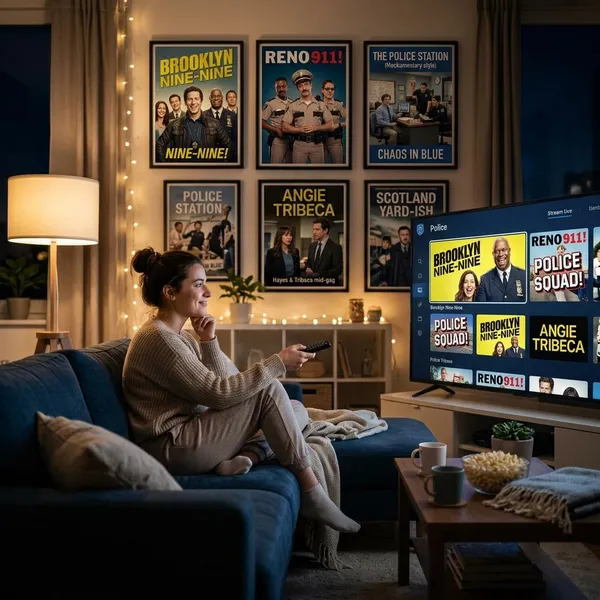
Police Comedy Sitcoms to Start With
Start with tone before reputation. Police comedies can share a precinct setting and still feel completely different: one may play like a friendly office sitcom, while another is closer to sketch comedy or deadpan spoof.
Brooklyn Nine-Nine for teamwork and precinct rivalries
Brooklyn Nine-Nine is the easiest starting point if you want quick jokes, likable characters, and a precinct that feels more like a workplace family than a realistic police department. The cases give each episode shape, but the real pull is the team: rivalries, competitions, friendships, and recurring character habits.
Reno 911! for chaotic mockumentary humor
Reno 911! is a better fit if polished sitcom structure feels too neat. The mockumentary format makes the officers look unprepared, awkward, and often completely out of their depth.
- Good fit: you like cringe comedy, sketch-like scenes, and improvisational energy.
- Bad fit: you want warm character arcs or tidy episode plots.
- Best test: watch one traffic stop or public-call scene and see whether the discomfort makes you laugh or makes you bail.
Angie Tribeca for absurd detective spoofs
Angie Tribeca is for viewers who want jokes packed into almost every scene. It treats detective-show clichés with total seriousness while the actual situations become ridiculous, which makes it closer to a rapid-fire spoof than a traditional workplace sitcom.
This is a strong choice when you do not need emotional investment. If you enjoy visual gags, puns, fake-serious investigations, and background jokes, it gets to the point quickly.
Police Squad! for deadpan jokes and sight gags
Police Squad! is short, dry, and full of straight-faced nonsense. The actors behave as if they are in a serious crime drama, while signs, timing, props, and repeated bits quietly undercut everything around them.
It is especially worth trying if you like comedy that rewards attention. A casual viewer can enjoy the obvious gags, but the smaller sight jokes are often the reason people still talk about it.
Barney Miller for low-key precinct humor
Barney Miller moves at a calmer pace than modern police comedies, and that is part of its appeal. Much of the humor comes from conversations inside the precinct, tired reactions, odd visitors, and officers trying to stay reasonable in small, strange situations.
Pick this if you prefer dry dialogue over big comic set pieces. It is not the show to choose when you want nonstop gags, but it holds up well for viewers who like character rhythm and understated workplace tension.
The Thin Blue Line for British station-house clashes
The Thin Blue Line offers a British station-house version of the genre, with more emphasis on hierarchy, ego, and awkward clashes inside the workplace. If American precinct comedies feel too fast or too sentimental, this gives you a drier alternative.
Short Police Comedy Episodes to Try
Short police comedy works best when you want one complete comic situation without a long setup. A strange call, a bad arrest, or an awkward encounter can deliver a full joke arc in just a few minutes.
The Reno 911! Quibi revival for quick comedy bursts
The Quibi-era Reno 911! revival was built for brief viewing sessions, so it is one of the easiest ways to sample the show's mockumentary chaos. The shorter format suits the series because many scenes only need a strange call, an unprepared officer, and a few escalating reactions.
Do not assume every part of Reno 911! works this way, though. The original run uses more standard episode lengths, so choose the revival specifically if you want very quick comedy bursts.
Brief calls and encounters that suit short viewing breaks
Police comedy often breaks naturally into mini-stories: one complaint, one suspicious person, one failed attempt to take control of a scene. That makes it easy to watch casually without remembering a complicated plot.
- For a quick break: choose a scene-based episode where the joke starts early.
- For relaxed evening viewing: pick a fuller ensemble episode with more character interplay.
- For rewatching: sight-gag and deadpan shows often age better than twist-based plots.
How Police Comedies Turn Cases Into Laughs
Police comedies usually treat the case as a setup, not the main reward. The laugh comes from how badly people handle authority, pressure, procedure, or each other.
Routine calls spiral into ridiculous situations
A routine call is a perfect sitcom engine because the audience knows how simple it should be. A noise complaint, traffic stop, or minor disturbance becomes funny when the officers misunderstand it, overreact, or create a bigger problem than the one they came to solve.
This is why the genre is easy to enter midstream. You do not need deep lore to understand why a basic call has gone wrong.
Clashing personalities derail police work
In character-driven police comedy, the case often matters less than who has to work on it together. A strict captain, an immature detective, an overconfident officer, or someone desperate to prove a point can turn a simple task into a mess.
That is the reason shows like Brooklyn Nine-Nine are easy comfort viewing: the pleasure comes from familiar dynamics, not from solving the mystery.
Detective clichés become running jokes
Parody shows use the language of crime drama against itself. Dramatic reveals, interrogation-room intensity, genius hunches, and tough-cop speeches all become joke material when the show plays them straight while making the details absurd.
Angie Tribeca and Police Squad! are the clearest choices here. They work especially well if you have seen enough detective TV to recognize the clichés being twisted.
How to Choose Your First Police Comedy
Choose by viewing mood first, then by title. If you want an easy after-dinner sitcom, start with character chemistry. If you want something strange during a short break, go for chaos or parody. If you are watching with someone who dislikes cringe humor, avoid starting with the roughest mockumentary option.
| Your mood | Start with | Skip first if |
|---|---|---|
| Warm workplace comedy | Brooklyn Nine-Nine | You want dry or absurd parody |
| Messy improvised chaos | Reno 911! | You dislike cringe or adult humor |
| Fast spoof and sight gags | Angie Tribeca or Police Squad! | You want emotional story arcs |
| Slower classic dialogue | Barney Miller | You need rapid pacing |
Conclusion
The best first pick is the one that matches your tolerance for warmth, chaos, parody, or slower dialogue. Start with Brooklyn Nine-Nine if you want the safest all-around choice, try Reno 911! only if awkward disorder sounds fun, and move to Angie Tribeca, Police Squad!, or Barney Miller when you know whether spoof or classic precinct humor is more your style.
FAQS
Are police comedy sitcoms suitable for teens?
Some are, but not all. Brooklyn Nine-Nine is usually the safer starting point, while Reno 911! can be much more adult, so check the rating and sample an episode before watching with younger teens.
Do police sitcoms follow a new case in every episode?
Often, yes, but the case is usually just the setup. The real continuity tends to come from character dynamics, running jokes, and workplace relationships rather than serious procedural plotting.
Is every season of Reno 911! made up of short episodes?
No. The Quibi revival was designed for very short viewing, but the original series mostly uses more typical sitcom-length episodes.